
Description
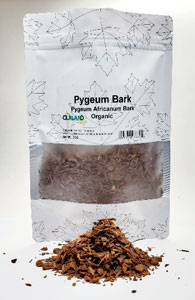
Pygeum bark powder is the ground form of the same African cherry bark sold in cut-and-sifted pieces under a separate listing. This is the powdered form of pygeum bark, from the same tree as the cut & sifted bark: Pygeum africanum, the African cherry, growing in the mountainous regions of sub-Saharan Africa. The bark is described as organic and sustainably wild-harvested by village partners, processed without high-heat treatment and free from synthetic pesticides and chemicals. The page notes its natural phytosterols, including beta-sitosterol, and its traditional preparation as a brewed beverage in many cultures.
Grinding the bark to a powder changes how you work with it: it measures out by the spoonful and goes straight into the pot. The original preparation for the powder is a decoction — about 1–2 tablespoons of powder for every 16 oz of filtered water, brought to a gentle boil, then simmered covered on low for 20–30 minutes and strained before drinking, plain or blended with herbs such as nettle root or saw palmetto.
Store airtight in a cool, dry place, such as a dark glass jar. Available in 1, 3, 5, 6 and 8 ounce sizes.
Preparing pygeum bark powder
The method for pygeum bark powder remains a decoction, not a brief steep. Add 1–2 tablespoons of powder to 16 oz of filtered water in a stainless steel or glass pot. Bring the mixture to a gentle boil, reduce the heat to low, cover and simmer for 20–30 minutes. The original page describes the liquid turning a deep, rich reddish-brown during this process. Strain it before drinking and serve it plain or blend it with nettle root or saw palmetto.
The practical difference made by pygeum bark powder is distribution. Powder can be measured by the spoonful and mixed directly through the water at the start of the decoction, while cut bark remains in discrete pieces throughout the simmer. Both forms use the same proportions and timing in the original preparation notes. Straining is still required after simmering so the ground bark is separated from the finished liquid.
Sourcing and storing pygeum bark powder
Pygeum bark powder begins with bark that is sustainably wild-harvested by village partners in sub-Saharan Africa. The original page describes direct purchases from villagers, fair wages, protection of pygeum trees and measures intended to prevent over-harvesting. Processing avoids high-heat treatment, and the bark is described as free from synthetic pesticides and chemicals. Its named plant compounds include natural phytosterols, including beta-sitosterol; that composition is stated here without assigning it an effect.
Store pygeum bark powder airtight in a cool, dry place, such as a dark glass jar. The original storage guidance for the bark gives up to two years when stored correctly and notes that light and moisture can degrade plant compounds over time. The original page also recommends consulting a professional before adding a new herb to a routine. The available 1, 3, 5, 6 and 8 ounce sizes let you choose a quantity based on how often you prepare the 1–2 tablespoon decoction. Select pygeum bark powder when you want the ground form that disperses into the pot, rather than the cut-and-sifted bark pieces.
The original page likewise describes the powder as meeting high traditional-use standards set through generations of herbal expertise. Its provenance is the same African cherry bark and village-partner sourcing model, while the customer-facing difference is the grind. A powder has more surface area in the water than bark pieces and should be stirred into the liquid at the start of the decoction so it is distributed before the covered simmer begins.
Pairs well with: Pygeum Bark — Cut & Sifted · Nettle Root · Saw Palmetto

Reviews
There are no reviews yet.