Description
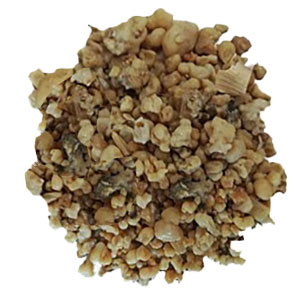
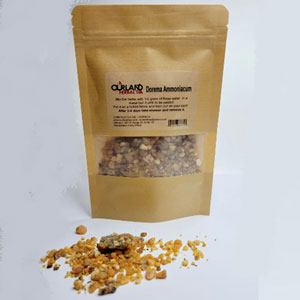
Gum ammoniac is one of the classic aromatic resins of the Persian steppes: the hardened tears of Dorema ammoniacum, a tall umbellifer of the dry Iranian plateau. It is the plant’s own wound-seal, gathered by hand, dried in the sun, and used for centuries as incense, perfume fixative and household remedy — a resin that smells faintly of old libraries and warm earth.
What Is Dorema Ammoniacum?
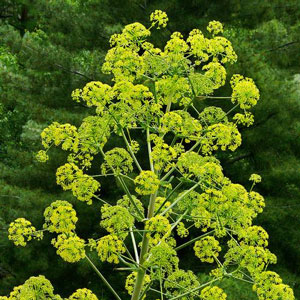
The plant behind gum ammoniac grows wild across the dry steppes and semi-desert country of Iran and the neighbouring regions, where summers are hot and dry and winters are cold. A perennial of the carrot family, it sends up a stout, hollow stem to two or three metres in a good year, crowned with broad umbels of tiny yellow-white flowers. After flowering the plant dies back, but the stem remains, full of the milky sap that will become gum ammoniac.
The name has travelled a long way: the resin was already known to the Greek and Roman world, and its name is traditionally traced to the Temple of Jupiter Ammon in the Libyan desert. In Persian it is called Vosha, and in the trade it has long been sold simply as ammoniacum. The modern classification places the same plant in the Ferula genus, as Ferula ammoniacum — a history reflected in older herbals, where it was grouped with the other great Ferula resins.
The resin of Dorema ammoniacum is a natural oleo-gum-resin, typically around 60–70% resin together with plant gum and a small share of aromatic volatile oil. For the botanical background, see the overview of ammoniacum on Wikipedia.
From Living Stem to Resin Tears
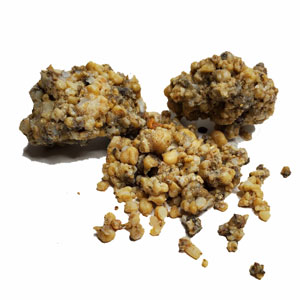
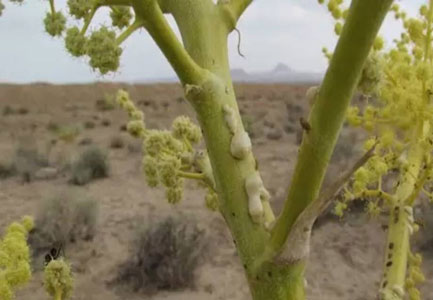
In spring and early summer the thick stems of Dorema ammoniacum fill with a milky juice, held in fine canals running through the stem, root and leaf stalks. When a stem is pierced — very often by boring beetles, and also by collectors’ incisions — the juice wells out and hardens in the dry air into round “tears.” Some tears set on the stem itself; others fall to the ground and are gathered from the plant, traditionally over the summer months. Kept on their own, the clean single tears are the “tear ammoniacum” of the old herbals; pressed together, they form “lump ammoniacum.”
A freshly broken tear shows a waxy lustre and a pale interior beneath its reddish-yellow skin, and the aroma is distinctive: faint and resinous when cold, deeper and unmistakably balsamic-pungent as it warms.
A Resin with a Long History
Few resins carry a longer paper trail. Ammoniacum was recorded by Dioscorides in the first century, and its name is traditionally traced to the Temple of Jupiter Ammon in the Libyan desert, near whose shrine the resin was once collected. Over time the Persian gum ammoniac became the ammoniacum of world trade, valued as an aromatic resin for religious ceremonies in many countries. Perfumers put it to work as a resinous ingredient, and illuminators even used it as an adhesive for gold leaf.
In traditional Persian practice, Vosha — the gum of Dorema ammoniacum — has long been valued as a herbal resin, and the gum is still mixed with esfand (wild rue seeds) and burned as a fragrant household incense — an old folk custom kept for its scent and its ritual. Ourland Herbs offers it in that same spirit: a genuine traditional resin, rather than a substitute gum.
Burning, Blending and Storage
To burn Dorema ammoniacum resin as incense, light a charcoal disc in a heatproof burner, let it settle to a grey ash, then rest a small tear or a pinch of broken resin on top — a little goes a long way, as the scent is powerful and grows sharper with heat. It is rarely burned alone for long; blended with frankincense or myrrh it rounds out a classic resin mixture. Between uses, store the tears in an airtight jar in a cool, dry place away from direct sunlight and they will keep their aroma well. Available in 1, 2 and 4 ounce sizes.
Pairs well with: Asafoetida · Organic Myrrh Gum

Reviews
There are no reviews yet.