Description
An areca nut is the dried whole seed of the areca palm, Areca catechu, and this listing offers that whole dried areca nut for Hindu pooja ritual and ceremonial offering use. Sold for pooja ritual and ceremonial use, each bag contains whole, dried nuts in their natural, uncut form, ready to be placed in a pooja thali or offered in a ceremony.
This areca nut is listed in four sizes, so a household can choose a small bag for a single occasion or a larger bag for repeated rituals through the year.
What Is Areca Nut?
Areca nut is the seed of the areca palm, a tall palm tree grown in warm, tropical regions of Asia and the Pacific. The palm produces clusters of fruit, and inside each fruit is a single seed.
When that seed is dried, it becomes the hard, whole nut sold in this listing. The botanical name for the palm is Areca catechu, and the dried seed is known in English as areca nut, in Hindi as supari, and in many other languages by local names that refer to the same whole seed. For background on the palm and its seed, see the Wikipedia page for Areca nut.
This listing contains only the dried whole seed, with nothing added and nothing removed except the outer husk and moisture lost during drying. The nuts are supplied whole, not cut, sliced, powdered or ground, so each piece keeps its natural round or oval shape.
Areca Nut, Betel Nut and Supari: Three Names for One Whole Nut
The names areca nut, betel nut and supari are often used for the same whole dried seed, and that can be confusing for a first-time buyer. Areca nut is the English name most often used in Canada. Betel nut is another English name, used because the nut is traditionally placed with betel leaf in many rituals and ceremonies. Supari is the Hindi name, widely used in Indian households, shops and temples in Canada and abroad.
All three names in the title of this listing describe the same product: a dried whole areca nut from Areca catechu. When you order, you will receive whole nuts, not a leaf, not a powder and not a prepared mixture. Knowing the three names helps when you are preparing for a ceremony, because a family member, a priest or a shopkeeper may use any one of them for the same item.
What Whole Dried Areca Nuts Look Like
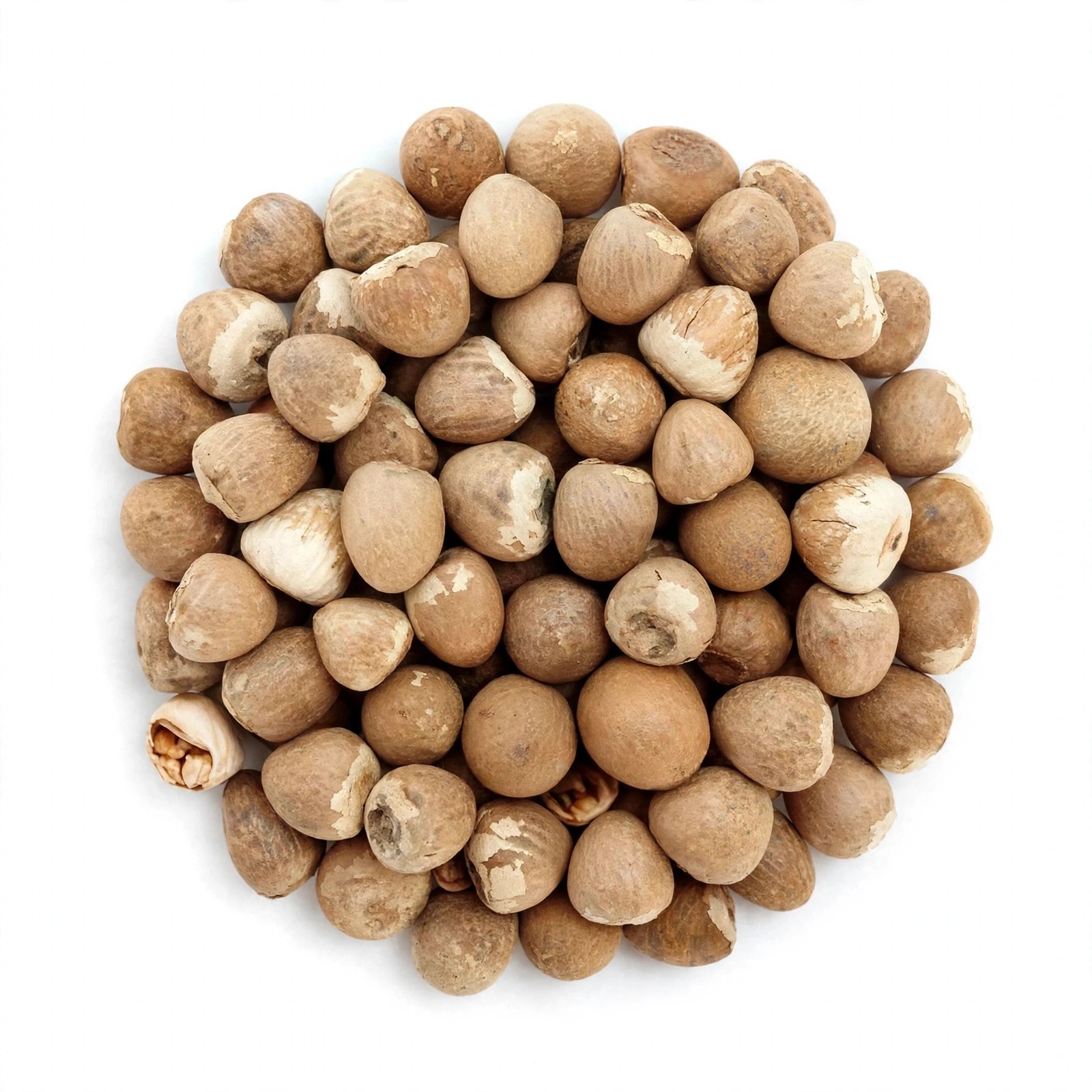
A whole dried areca nut is round or oval, with a firm, hard surface and a warm tan-brown colour. The surface may show fine lines, small marks or a slightly mottled pattern, and the colour may range from pale tan to a deeper brown from one nut to the next. Each areca nut is solid and heavy for its size, and it does not bend or crumble when handled.
The photograph for this listing shows a round arrangement of the dried whole nuts on a pure white background, so you can see the shape, size and colour before you order. The nuts in your bag will look like the nuts in the photograph, in the same round or oval form and the same tan-brown range, although no two dried natural nuts are exactly alike. That natural difference is part of buying a whole dried product, and it does not change the way the nut is used in a ritual.
Areca Nut in Hindu Pooja Rituals
In Hindu tradition, areca nut has a long-established place as a sacred offering in pooja, the act of worship offered to a deity in the home or in a temple. An areca nut is treated with respect in the ritual, and it is placed among the other items of worship rather than set aside on its own.
It is present in daily pooja in many homes, in weekly worship, and in special poojas held for a festival, a birthday, a new home or another important occasion.
The nut is valued in the ritual because it is whole, natural and unbroken, and because its round, complete form is seen as fitting for an offering. This listing is for that ritual purpose.
The nuts are sold for pooja ritual and ceremonial use, and they are packed whole so that they can be placed, offered and kept as part of the ceremony in the form in which they are traditionally presented. Each areca nut supplied here is whole, so it can be presented in the traditional way.
Areca Nut on the Kalash and in the Pooja Thali
A pooja thali is the plate or tray that holds the items used in worship, and a whole supari often has a place on it. The thali may also hold flowers, rice, kumkum, a small lamp, incense and other offerings, and the areca nut sits among them as one of the traditional items.
In some rituals, a whole areca nut is placed on the kalash, the pot of water topped with mango leaves and a coconut that represents the deity and the presence of the divine in the ceremony. In other rituals, the nut is placed beside the kalash, on the thali, or in front of the image or murti being worshipped.
The exact placement varies from family to family and from one ritual to another, and it is usually guided by the person leading the pooja or by the customs of the household. What stays the same is the form of the offering: a whole, uncut nut, placed with care and respect.
Areca Nut in Weddings and Festival Rituals
Whole supari also appears in wedding rituals and in festival rituals, where it is offered as part of the ceremonies that mark a marriage, a new beginning or a seasonal celebration. In a wedding, areca nut may be present in the rituals performed before, during and after the ceremony, alongside betel leaf, flowers, rice and other traditional items.
In festival worship, such as Diwali, Ganesh Chaturthi, Navratri and other observances, a whole nut may be placed in the pooja as part of the offerings made during the festival.
The occasions differ, and the prayers and customs differ with them, but the role of the whole nut remains the same: it is a traditional, sacred offering, presented whole and with respect. Because festivals and weddings often involve several poojas over several days, many households choose a larger bag, so that whole nuts are on hand for each part of the celebration.
Natural Variation in Size and Colour
Because these are whole dried seeds from a natural palm, the nuts in a bag are not identical, and the differences are easy to see once the bag is opened. One nut may be a little larger than the next, and one may be a little more round while another is a little more oval.
The tan-brown colour also varies, with some pieces lighter, some darker, and some showing a mottled or streaked surface. The surface markings, which may include fine lines and small spots, differ from piece to piece as well.
These differences come from the natural growth of the seed, from the size of the fruit it grew in, and from the drying process, which removes moisture and leaves the seed hard and firm. No sorting process can make every dried seed exactly the same, and this listing does not claim that they are.
When you open a bag, check that the nuts are dry, hard and whole, and that the bag is sealed as it should be on arrival. Keep the nuts you need for the next ritual in a clean, dry place, and return the rest to the sealed bag so that they stay dry until they are needed.
A larger bag will contain more pieces, and a smaller bag will contain fewer, but the form of each piece is the same: a whole, dried, tan-brown seed, round or oval, with the natural variation that belongs to a dried botanical product. That variation is normal, and it is one of the ways you can tell that the product is a whole natural seed rather than a manufactured item.
Storage and Keeping Dried Whole Supari
Dried whole supari keeps best in a cool, dry, sealed place, away from direct sunlight, moisture and strong smells. A sealed container or a tightly closed bag is suitable, and the container should be kept in a cupboard or on a shelf where the temperature stays even and the air stays dry.
Moisture is the main thing to avoid, because a dried seed that takes in moisture can soften, change colour or develop an off smell, and it should not be used for a ritual if it looks or smells different from the way it should.
Direct sunlight can also change the colour of the nuts over time, so a dark cupboard or a closed container is a better choice than a sunny windowsill.
Strong smells from spices, cleaning products or other household items can be absorbed by dried botanical products, so the bag or container should be kept away from them and should be closed after each use. Before a ritual, take out only the whole nuts you need for that occasion, and close the bag or container again straight away.
Check each piece before it is placed in the thali: it should be dry, hard, whole and tan-brown, as shown in the photograph.
If a piece is broken, soft, damp or discoloured, set it aside and use another whole piece from the bag. With dry, sealed storage, a bag bought for a festival season can be kept for later rituals in the same season, and a larger bag can be drawn on over a longer period, provided the bag is kept sealed and dry between uses.
The storage guidance in this listing is about keeping the dried whole seeds in the condition in which they were supplied, so that they are ready to be placed in a pooja thali whenever they are needed.
Areca Nut Sizes, Prices and Ordering Across Canada
This listing offers the whole dried supari in four sizes, each with its own price. The 50 g bag is CA$7.25, the 100 g bag is CA$11.10, the 250 g bag is CA$23.10, and the 450 g bag is CA$35.15.
The 50 g bag suits a single pooja or a small household occasion, while the 100 g bag suits a household that holds pooja regularly. The 250 g bag suits a family preparing for several rituals, and the 450 g bag suits a wedding, a festival season or a household that wants whole supari on hand for repeated ceremonies.
Choose the size from the Weight menu on this page, and the price shown will change to match the size you have chosen.
Orders are shipped across Canada from Ourland Herbs in Toronto, Ontario, Canada. Shipping is free on orders over $150, and orders below that amount are shipped at the rate shown at checkout.
When your order arrives, open the package and check that the bag is sealed and that the dried whole nuts inside look dry, hard and whole, as pictured.
If you keep other dried products on the shelf, you may also like our Mulberry Leaves, another dried product sold in the same four sizes, or our Haritaki, a dried whole fruit sold in the same four sizes. Each listing states its form, its size and its price, so you can choose the product and the bag that suit the occasion you are preparing for. Sold for pooja ritual and ceremonial use.