Description
Haritaki is the dried whole fruit of Terminalia chebula, offered here under its Hindi name, harade. This listing is for the regular whole fruit, dried and sold loose by weight, in four sizes from 50 g to 450 g. Each bag contains whole, dried haritaki fruits, not powder, capsules, or a ready-made drink. The fruit is a familiar sight in South Asian markets, where it has been traded, stored, and prepared at home for a very long time. This page describes what the fruit looks like, how it is traditionally prepared, how it differs from the black form sold in our store, and how to order it across Canada.
What Haritaki Is
Haritaki is the common name for the dried fruit of Terminalia chebula, a tree in the family Combretaceae that grows in South Asia. The botanical name Terminalia chebula is the name used in plant lists and reference works, while haritaki and harade are the names most often used in markets and in everyday speech. The fruit sold here is the whole dried fruit, with its familiar ribbed, oval shape kept intact. It is also known in English as chebulic myrobalan, a name that appears in older trade and botanical writing. For a general botanical overview, see the Wikipedia page for Terminalia chebula.
The tree that bears this fruit is a deciduous tree of warm, seasonally dry regions. Its fruit is picked when ripe and then dried, a step that firms the skin, deepens the colour, and makes the fruit suitable for storage and transport. Drying is a simple, long-established way of keeping fruit from one season to the next, and it is the reason the fruit in this listing can be kept on a shelf and prepared in small amounts as needed. The dried fruit is light for its size, firm to the touch, and easy to crush or break before soaking or simmering.
Haritaki Whole Fruit: What It Looks Like
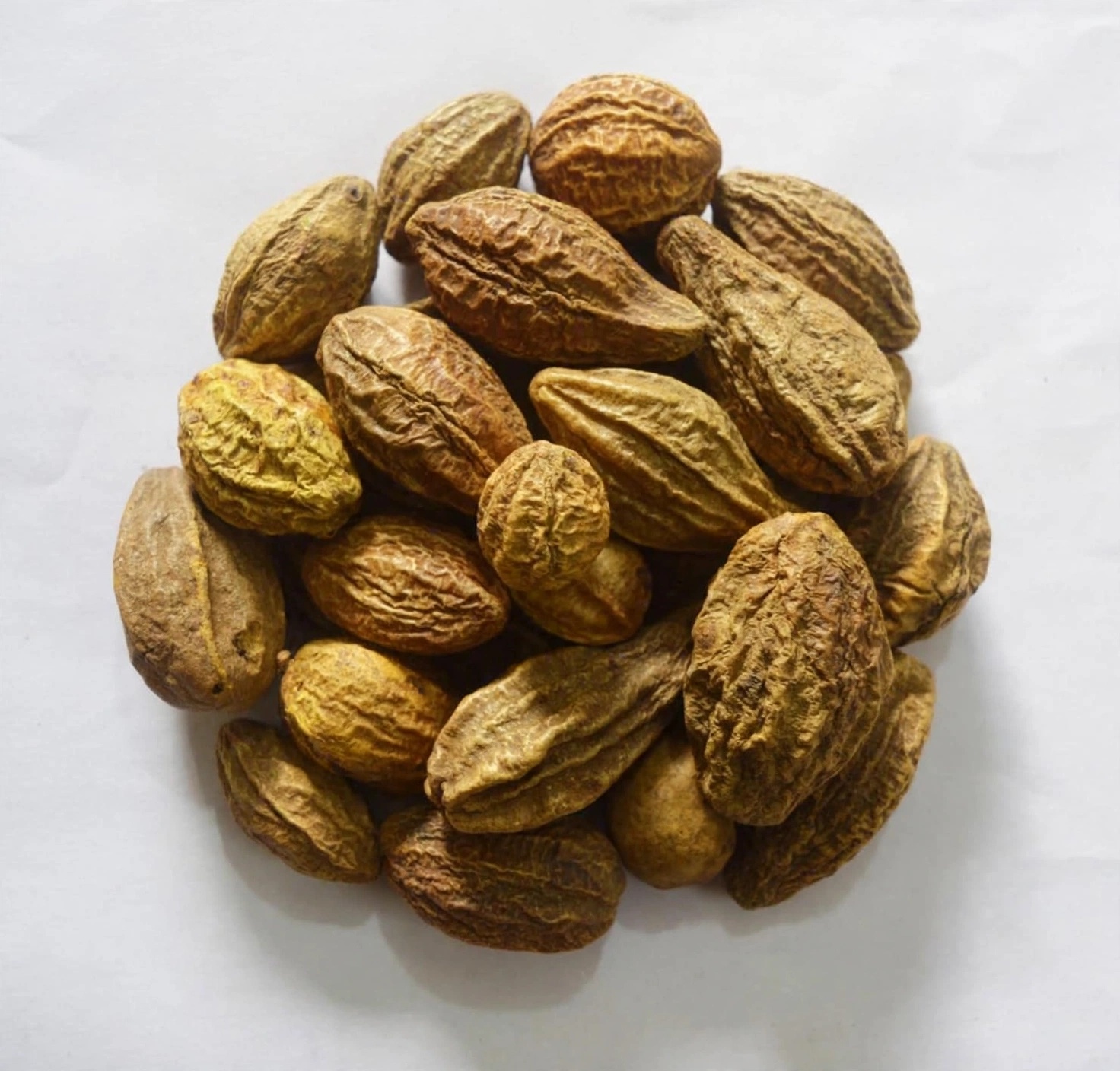
A whole dried haritaki fruit is oval, with five clear ridges running from one end to the other. The skin is yellow-brown to brown, slightly wrinkled, and firm, and the fruit feels dry and hard in the hand. Inside the skin is a hard, ridged stone, which is part of the whole fruit as it is sold. The fruits in a bag vary a little in size and shade, as dried fruit from a natural harvest does, but the oval, ribbed shape is the same from fruit to fruit.
The photograph for this listing shows a round pile of the dried whole fruits on a white background, so the shape and colour can be seen clearly before ordering. When a bag arrives, the first check is a simple one: the fruits should look and smell dry, clean, and as pictured, with no dampness and no off smell. Keep the bag closed between uses, and handle the fruit with dry hands.
Haritaki in the Ayurvedic Tradition
Haritaki is one of the classic fruits of the Ayurvedic tradition, the system of traditional knowledge that developed in South Asia. In that tradition, the dried fruit is one of the best-known plant materials, and it appears in many old texts, recipes, and household practices. Its Hindi name, harade, is the name used in many of those sources, and it is still the name used in markets across northern India. The fruit is valued in that tradition for its place in daily and seasonal practice, and for the way it has been prepared and used in the home for generations.
This listing describes the fruit and its traditional preparation only. It does not make any claim about what the fruit does in the body, and it should not be read as medical advice. Readers who want to learn more about the plant itself can start with a general reference work, such as the Wikipedia page for Terminalia chebula, and readers who want advice about their own circumstances should speak with a qualified professional.
Haritaki and Triphala
Haritaki is also known as one of the three fruits in Triphala, a traditional blend whose name means three fruits in Sanskrit. The other two fruits in that blend are amalaki and bibhitaki, and the three are dried, powdered, and mixed together in the traditional preparation. The blend is a familiar part of Ayurvedic practice, and haritaki is the fruit in it that gives the blend part of its sour and astringent character. This listing, however, is for haritaki on its own, as a single whole fruit, not as part of a blend.
Buying the fruit on its own suits people who want the whole fruit in its simplest form, so they can see exactly what they are getting and prepare it in their own way. A single-fruit listing also makes it easy to tell this fruit apart from blends and powders, and to store it alongside other whole dried fruits and herbs on the shelf.
How to Prepare Haritaki at Home
Whole dried haritaki is traditionally prepared by crushing or breaking the fruit and then soaking or simmering it in water. One common traditional method is to crush a fruit, place the pieces in water, and leave them to soak, then strain the liquid. Another is to simmer the crushed fruit gently in water to make a decoction, then strain it before use. The fruit can also be soaked overnight and the liquid strained in the morning. In each case, the whole fruit is the starting point, and water is the only other ingredient in the traditional preparation.
The amount used, the length of soaking or simmering, and the way the liquid is served vary from household to household and from one traditional source to another, so there is no single standard recipe to follow. Start with a small amount, use clean water and clean equipment, and store any prepared liquid as the source you are following directs. The dried fruit itself should be kept dry until it is prepared, and only the amount needed for one preparation should be taken from the bag at a time.
The Taste of Haritaki
Haritaki has a sour and astringent taste, with a dry, puckering quality that is easy to notice on the tongue. Astringency is the dry, drawing-in feeling that some fruits, teas, and unripe fruit also have, and it is one of the most often described features of this fruit. The taste is strong in the whole dried fruit, and it becomes more noticeable when the fruit is soaked or simmered in water. The flavour is not sweet, and it is not the flavour of a fresh eating fruit; it is the flavour of a dried, ribbed fruit that has been kept for storage and preparation.
Taste varies a little from fruit to fruit, as it does with any dried natural product, and the strength of the taste in a cup depends on how much fruit is used and how long it is soaked or simmered. Anyone preparing the fruit for the first time should expect that sour, astringent character and should follow the traditional method they have chosen, rather than adding other ingredients to change the taste.
Haritaki or Black Himej: How They Differ
Our store also sells Black Himej, the black form of the same species, Terminalia chebula. The two listings are for the same species, but they are not the same product. This listing is for the regular whole fruit, which is yellow-brown, oval, and ribbed. Black Himej is the black form, which is darker in colour and different in appearance, and it is sold as a separate product with its own sizes and prices. The difference is in the form and appearance of the fruit, not in the species name, which is the same for both.
Customers who want the regular whole fruit should order this listing, Haritaki | Harade Whole/Terminalia Chebula Organic. Customers who want the black form should order Black Himej instead. The two products are listed separately so that each one can be ordered in the right form, and so that the photograph, the description, and the price on each page match the fruit in that bag. If you are unsure which form you want, compare the photographs on the two pages before ordering.
Storage and Handling of Haritaki
Store dried haritaki in a cool, dry place, in a sealed container or a tightly closed bag, away from direct sunlight, moisture, and strong smells. A kitchen cupboard or pantry shelf is suitable, as long as the container stays closed and the fruit stays dry. Do not store the fruit in a damp place, and do not leave the bag open, because moisture can spoil dried fruit and change its smell and texture.
Check the fruit before each use. It should look dry, firm, and as pictured, and it should smell dry and clean. If a fruit looks damp, soft, or mouldy, or smells off, do not use it. Keep the fruit out of reach of children, and keep the bag or container labelled so that it is not confused with other dried fruits or herbs on the shelf.
Haritaki Sizes, Ordering and Shipping in Canada
Haritaki is available in four sizes: 50 g for CA$20.45, 100 g for CA$31.60, 250 g for CA$50.25, and 450 g for CA$71.90. The 50 g bag is a small size for trying the whole fruit for the first time, while the larger bags suit people who prepare it regularly and want to keep a larger supply on hand. Choose a size from the Weight menu on this page, and the price will change to match the size you have chosen. Each size is the same dried whole fruit, in a larger or smaller bag.
Orders are shipped across Canada from Ourland Herbs in Toronto, Ontario, Canada. Shipping is free on orders over $150, and orders are packed for travel so that the dried fruit arrives dry and intact. Delivery times vary by destination, and tracking is provided where the shipping service offers it. If you are ordering for the first time, check the shipping information at checkout before you place your order.
If you keep other dried herbs on the shelf, you may also like our Mulberry Leaves, another dried product sold in the same four sizes. It is listed as Mulberry Leaves | Morinda citrifolia | Organic, and it is packed as loose, cut and sifted leaf. The two products are different plants and different forms, but they are stored in the same way, in a cool, dry, sealed place, and they are ordered in the same way, by choosing a size and adding it to the cart.
This product is not intended to diagnose, treat, cure or prevent any disease. This information is for general and cultural purposes only and is not medical advice.