Description
Bugleweed herb is the dried, cut aerial parts of Lycopus virginicus, a North American native perennial in the mint family, offered here as an organic, cut and sifted herb for teas and infusions. This listing is for loose dried bugleweed herb, not tea bags, powder or a ready-made drink, and each bag holds small green pieces of leaf and stem that are measured out by the spoonful and steeped in hot water.
The herb in this listing comes from the aerial parts of the plant, the leafy stems that grow above the ground. After harvest, the bugleweed plant material is dried and then cut and sifted, which gives the even, loose pieces that suit loose-leaf brewing. Drying removes moisture so the herb can be kept in a sealed bag or jar, and cutting makes it easy to measure a spoonful at a time without grinding or tearing whole leaves by hand.
What Is Bugleweed Herb?
Bugleweed herb, as sold here, is simply the dried aerial parts of Lycopus virginicus, cut into small pieces and sifted to remove dust and very fine particles. The botanical name, Lycopus virginicus, is shown in the product name so the plant can be identified without confusion, because common names are sometimes shared between different plants. The herb is sold as a single-ingredient dried herb, with nothing added and nothing taken away except moisture during drying.
In the cupboard, this herb belongs with other dried leaves and cut herbs for herbal tea. It is packed loose, so you can see the leaf and stem pieces when you open the bag, and you can measure exactly as much as you need for one cup or one pot. The four sizes in this listing give the same herb in different amounts, so a first bag can be small and a regular supply can be larger.
A North American Native of Wetlands and Stream Banks
Lycopus virginicus is a North American native perennial, widespread in eastern Canada and the eastern United States. In the wild it grows in damp, shady places, including wet spots in forests and woodlands, swamps, floodplains and other riparian zones beside streams and rivers. The plant favours ground that stays moist, and it is often found where water moves slowly or stands after rain.
As a perennial, the plant returns year after year from its roots, sending up new stems each growing season. In the wild, the stems can reach about a metre tall, with a hairy, squared stem and oppositely arranged leaves. The leaves are dark green or purple, with oval to lance-shaped blades and toothed edges, and clusters of tiny white or pink-tinged flowers appear in the leaf axils in season.
That wetland home shapes bugleweed. The leaves and stems grow lush in moist ground, and the plant is at home in the damp margins of streams and ponds, where many drier herbs would not grow. Knowing where a plant grows in the wild helps to place it among other North American native herbs, and it explains why this herb is grouped with other plants of damp ground in botanical references.
The Mint Family and the Plant Behind the Herb
Lycopus virginicus belongs to the mint family, Lamiaceae, the large plant family that also includes mint, sage, rosemary and thyme. Plants in this family often have squared stems and opposite leaves, and many of them carry a clear herbal scent when the leaves are crushed or steeped. The family connection is a useful guide to the plant’s appearance, even though each member of the family has its own leaf shape, scent and taste.
The genus name Lycopus comes from Greek words for wolf and foot, a reference to the shape of the leaves in some members of the genus, and the species name virginicus points to Virginia, part of the plant’s native range. The plant is also known by other common names, including Virginia water horehound, sweet bugleweed, water bugle, carpenter’s herb and wolf foot. The name Virginia water horehound is the one most often used in older herbals and botanical lists, and it reflects both the plant’s home and its wetland habitat.
For readers who want to check the botanical details of bugleweed, the Wikipedia page for Lycopus virginicus gives the scientific classification, the common names and a short description of the plant and its habitat. Botanical references of that kind are a good place to confirm a plant’s family, its native range and the names it is known by.
What Dried Cut Bugleweed Herb Looks Like
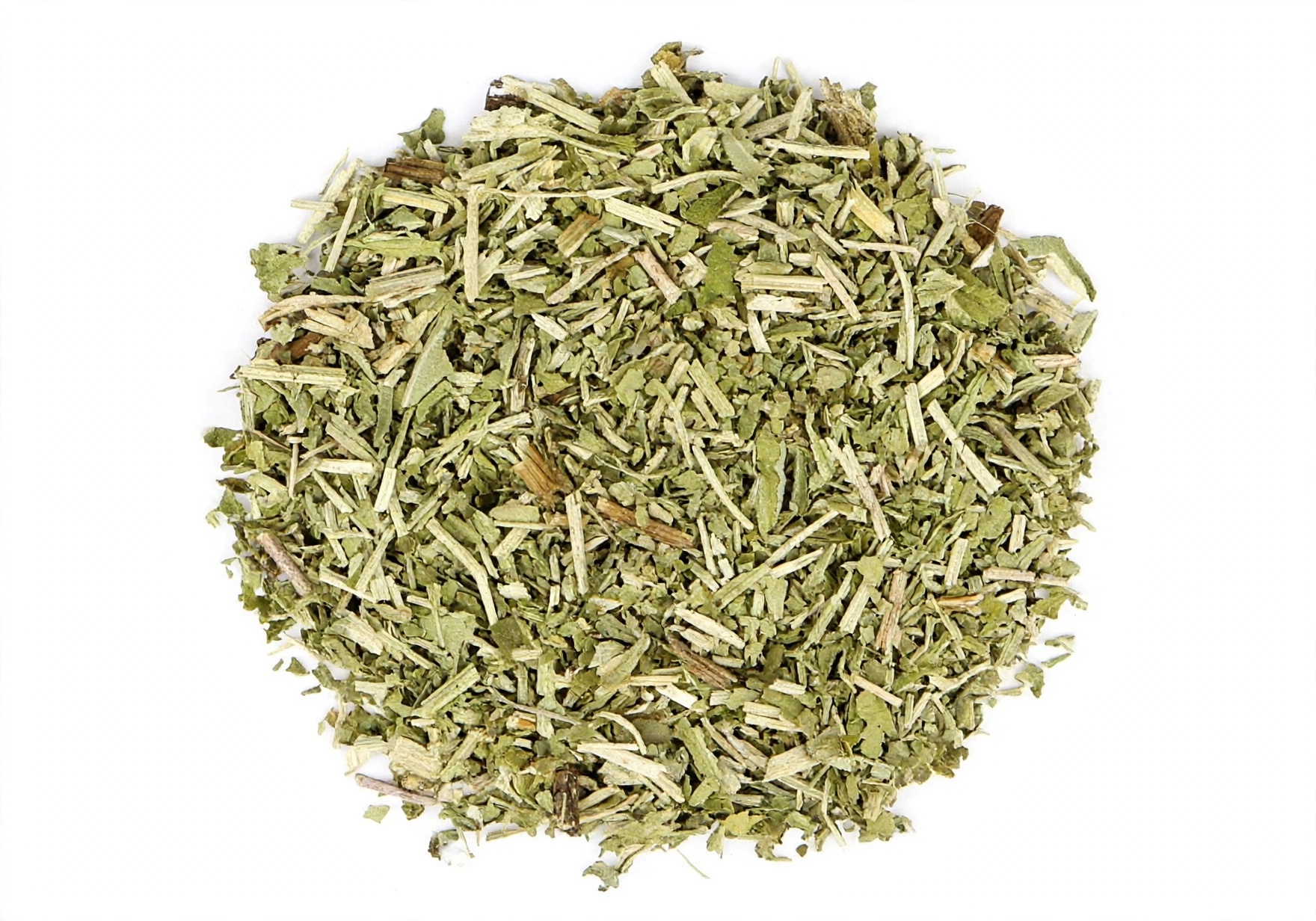
When you open a bag of this herb, you will see a pile of small, green leaf and stem pieces in different shades of green, with some pieces darker than others. The leaf pieces are flat and thin, with edges that show where they were cut, and the stem pieces are short, pale green to brownish lengths that sit among the leaves. Together they form a loose, dry mixture that pours easily from the bag and can be picked up in a spoon.
The cut and sifted form is the middle ground between whole dried leaves and a fine powder. Whole leaves take up more space and need to be broken before brewing, while a fine powder passes through a strainer and clouds the cup. Cut bugleweed pieces are large enough to stay in an infuser or strainer, and small enough to release their colour and aroma into hot water in a few minutes of steeping.
The herb has a mint-family scent when the bag is opened, and a bitter taste, which is a noted feature of the fresh plant as well. The dry pieces feel light and crisp, and they make a soft rustling sound when the bag is handled. A bag that has been kept sealed and dry should look and smell as it did when it arrived, with green pieces that are dry to the touch and free of damp or musty odours.
Bugleweed Herb in Folk Herbal Traditions
Bugleweed herb has a long history in North American and European folk herbal traditions, where the dried herb was prepared as teas and infusions. In folk practice, herbs were gathered, dried and kept for the household, and infusions were among the simplest preparations: dried plant material steeped in hot water and strained. That way of preparing herbs needed no special equipment, and it is the same simple method described in this listing.
In North America, knowledge of bugleweed came from both Indigenous traditions and the folk herbal traditions carried by settlers from Europe, and the plant appears in older herbal books and plant lists under its common names. In Europe, related folk traditions also valued dried herbs for teas and infusions, and plants of the mint family were a familiar part of the household herb shelf. The history is a history of use as a household herb for tea, rather than a history of a single preparation or a single region.
Folk herbal traditions are recorded in herbals, plant lists and ethnobotanical notes, and those records describe how plants were gathered and prepared in earlier times. This listing follows that traditional-use wording only: it describes the herb, its form and how an infusion is prepared, and it makes no claim about what the herb does. Readers who want the botanical background can follow the Wikipedia link in this description, which gives the plant’s classification and habitat in plain terms.
How to Prepare a Simple Bugleweed Infusion
To prepare a simple infusion, start with fresh water and bring it to a boil, then pour the hot water over the dried herb in a cup or teapot. Use about one to two teaspoons of dried bugleweed herb for each cup of water, and cover the cup while the herb steeps so the steam and scent stay in the cup. Let the infusion steep for five to ten minutes, then strain out the leaf and stem pieces and pour the clear infusion into a cup.
The same herb can be steeped a second time if you wish, although the second cup will be lighter in colour and taste than the first. A teapot or a larger infuser can be used for more than one cup, with the amount of herb increased in the same proportion. A fine strainer or a tea infuser keeps the small cut pieces out of the cup, and the strained herb can be composted or discarded after use.
The infusion is best prepared fresh, one cup or one pot at a time, and drunk while it is warm. If you are trying the herb for the first time, a single cup made with the smaller amount of herb is a good place to start, so you can learn its taste before making a stronger cup. The bitter, mint-family taste is part of the herb’s character, and some people add a little honey or mix the herb with other dried herbs for a different cup.
Taste, Aroma and Everyday Use
The taste of this herb is bitter, with a mint-family note that comes through in the scent of the dry herb and in the steam from a fresh infusion. The bitterness is clear but not harsh in a cup made with one to two teaspoons per cup, and it is the flavour that most people notice first. A cup of bugleweed herb has a green and herbal aroma, with the mint-family scent that the fresh plant is known for, and that aroma becomes stronger when hot water is poured over the dry pieces.
In everyday use, bugleweed herb is kept on the shelf with other dried herbs for herbal tea, and it is measured out by the spoonful as needed. It suits a plain cup on its own, and it can also sit beside other dried herbs in the cupboard, so that a different herb can be chosen on different days. The loose form makes it easy to use a little at a time, and the sealed bag keeps the rest of the herb fresh until it is needed.
Bugleweed Herb: Sizes, Prices and Ordering Across Canada
These bugleweed herb bags are sold in four sizes, and each size has its own price. The 50 g bag is CA$28.15, the 100 g bag is CA$43.60, the 250 g bag is CA$69.85, and the 450 g bag is CA$98.40. The 50 g bag suits a first try or a small cupboard, the 100 g and 250 g bags suit regular use, and the 450 g bag suits a household that uses the herb often or wants a larger supply on hand.
Orders of bugleweed herb are shipped across Canada from Ourland Herbs in Toronto, Ontario, Canada, and shipping is free on orders over $150. Choose the weight you want from the Weight dropdown on this page, then add the bag to your cart and check out. The price shown for the size you choose is the price for that bag, and the weight is printed on the listing so you can compare the four sizes before you order.
Storing Bugleweed Herb
Store bugleweed herb in a cool, dry place, away from direct sunlight, moisture and strong smells. Keep the herb in its sealed bag or in a clean, airtight jar, and close the bag or jar after each use so air and damp cannot reach the dried pieces. A kitchen cupboard away from the stove and the sink is a good place, and the herb should not be stored in a damp basement or in a warm, steamy room.
Check the bugleweed herb before each use and use only herb that looks and smells as it should. If the herb has become damp, has lost its green colour, or smells musty or off, it should not be used. With dry, sealed storage, the cut leaf and stem pieces keep their colour and scent, and the bag can be used a spoonful at a time over many cups.
Bugleweed Herb Alongside Other Dried Herbs
Many people who buy bugleweed herb keep more than one kind of dried herb on the shelf, so that a different herb can be chosen on different days. If you would like another dried herb for your cupboard, see our Mulberry Leaves, organic cut and sifted Morinda citrifolia leaves sold in the same four sizes, or our Five Finger Grass, an organic silverweed herb sold in several sizes. Each listing states its form, its sizes and its prices, so the herbs can be compared side by side.
This listing offers bugleweed herb in four sizes, with the prices given above, and the herb is packed as loose, dried, cut leaf and stem pieces. When your order arrives, open the package and check that the bag is sealed and the dried herb inside looks and smells as it should, then store the bag in a cool, dry, sealed place until you are ready to brew a cup.
This product is not intended to diagnose, treat, cure or prevent any disease. This information is for general and educational purposes only.